Description
Introduction
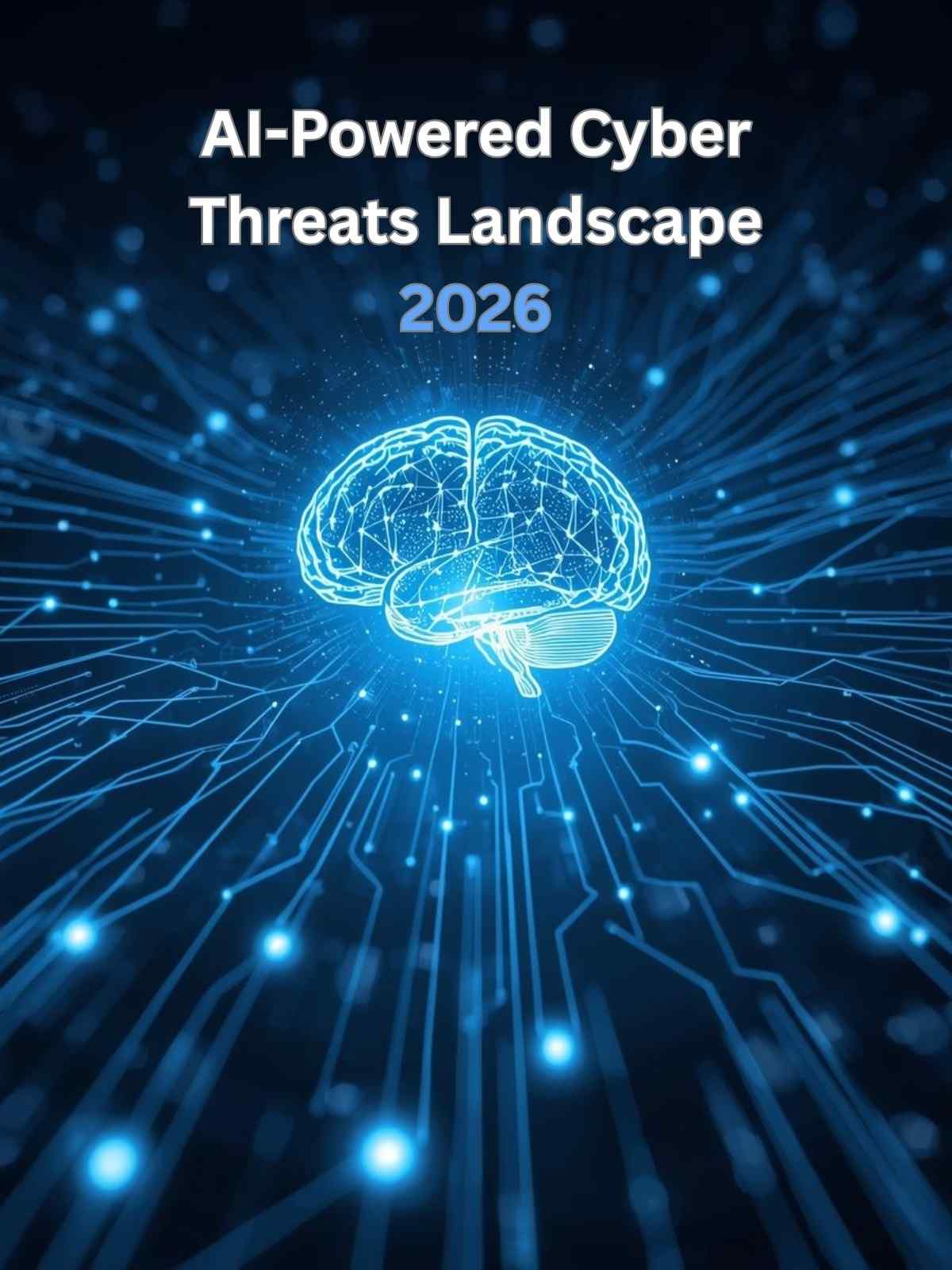
AI-powered cybersecurity threats are redefining how digital attacks are planned, executed, and sustained across enterprise, government, and critical infrastructure environments. These threats differ fundamentally from traditional cyber risks because they are adaptive, data-driven, and capable of autonomous decision-making. As artificial intelligence becomes more accessible, cyber adversaries are increasingly using it to bypass legacy defenses and exploit system complexity at scale.
By 2026, cybersecurity will no longer be a static control function. It is an intelligence contest where attackers and defenders both rely on machine learning, automation, and high-performance computing. Organizations that continue to depend solely on rule-based security models face growing exposure in this evolving threat landscape.
Why AI Has Fundamentally Changed Cybersecurity Risk
The shift toward AI-powered cybersecurity threats is driven by the availability of advanced machine learning frameworks, large language models, and automated tooling. Tasks that once required expert human intervention—such as reconnaissance, vulnerability prioritization, and social engineering—can now be performed by AI systems with speed and consistency.
Attackers use artificial intelligence to analyze system behavior, identify weak signals, and select optimal attack paths. This reduces operational effort while increasing success rates. As a result, sophisticated cyber operations are no longer limited to state-sponsored actors or highly organized groups.
Operational Characteristics of AI-Powered Cybersecurity Threats
AI-driven cyber threats function as adaptive systems rather than static tools. Instead of following predefined instructions, these threats observe defensive responses and modify their behavior in real time.
Key operational traits include:
-
Environment-aware execution
-
Dynamic payload modification
-
Automated evasion of detection controls
-
Delayed activation to avoid early discovery
These capabilities allow AI-powered cybersecurity threats to remain undetected for extended periods, increasing dwell time and potential impact.
Intelligent Malware and Adaptive Evasion Techniques
Modern malware increasingly integrates machine learning components that assess execution risk before activating. These systems determine whether they are operating in a production environment, a sandbox, or a monitored system.
If defensive controls are detected, the malware may pause, alter its behavior, or terminate itself. This adaptability reduces the effectiveness of signature-based detection and complicates forensic analysis, as each infection may exhibit different indicators.
AI-Driven Social Engineering and Identity Manipulation
Social engineering remains one of the most effective attack vectors, and artificial intelligence has significantly enhanced its impact. AI systems analyze publicly available data to generate highly personalized communication that aligns with the target’s language, context, and behavior patterns.
Natural language generation enables realistic phishing emails, while voice synthesis and video manipulation support advanced impersonation attacks. As organizations increasingly rely on digital identity verification, this trend presents a growing risk to authentication and trust-based security models.
Autonomous and Agentic AI Attack Models
A major concern in 2026 is the emergence of autonomous attack systems. These systems can plan and execute multi-stage cyber operations with minimal human oversight.
Agentic AI frameworks are capable of:
-
Continuous reconnaissance
-
Asset valuation and prioritization
-
Lateral movement within networks
-
Decision-based data exfiltration
This autonomy accelerates attack timelines and reduces opportunities for human intervention, making AI-powered cybersecurity threats more difficult to contain.
Ransomware Optimized Through Artificial Intelligence
Ransomware campaigns now leverage AI to improve targeting and negotiation outcomes. By analyzing stolen data, attackers assess regulatory exposure, operational dependency, and financial resilience.
Ransom demands are dynamically adjusted based on victim responses and external factors. This data-driven approach has increased both the frequency and severity of ransomware incidents linked to AI-powered cybersecurity threats.
Cloud, API, and Supply Chain Exposure
The growing reliance on cloud platforms and third-party software has expanded the attack surface. AI-powered cybersecurity threats exploit this complexity by rapidly identifying misconfigurations, vulnerable APIs, and insecure dependencies.
Once access is gained, malicious activity is blended into legitimate cloud operations. This makes detection challenging and shifts the defensive focus toward behavioral analysis rather than perimeter security.
Defensive Use of AI in Cybersecurity
To counter advanced threats, organizations are increasingly deploying AI in CyberSecurity to enhance detection, analysis, and response. Defensive AI systems focus on identifying anomalies, predicting attack paths, and automating remediation.
While these tools improve efficiency, they must be carefully governed. Poorly trained models or overreliance on automation can introduce blind spots and operational risk.
Compute Infrastructure and AI Inference Dependency
The effectiveness of both offensive and defensive AI systems depends heavily on the availability of computational resources. High-performance GPUs enable rapid model training and real-time inference.
Architectures such as key-value stores for AI inference support fast contextual retrieval, allowing AI systems to make timely decisions. The strategic importance of compute access has also driven secondary markets such as nvidia h100 gpu resale, underscoring the role of hardware availability in cybersecurity capability.
Strategic Modeling and Abstract Risk Analysis
Security leaders increasingly rely on conceptual modeling to understand evolving threats. Developing an Abstract for AI enables organizations to simulate attacker behavior, assess systemic risk, and test defensive strategies without exposing production environments.
This approach supports long-term planning and aligns cybersecurity strategy with broader enterprise risk management objectives.
Future Outlook and Risk Preparedness
AI-powered cybersecurity threats will continue to evolve as artificial intelligence and computing resources advance. Attackers will favor speed, autonomy, and adaptability, while defenders must focus on intelligence-driven security models.
Organizations that invest in behavioral visibility, continuous learning, and AI-aware governance will be better positioned to manage emerging risks. Cybersecurity resilience in 2026 depends not on static controls, but on the ability to anticipate and adapt.
Frequently Asked Questions
What are AI-powered cybersecurity threats?
They are cyber threats that use artificial intelligence to automate decision-making, adapt behavior, and optimize attack effectiveness.
Why are these threats difficult to detect?
Because they dynamically modify tactics and blend into normal system activity, reducing the effectiveness of traditional detection methods.
Does AI only benefit attackers?
No. AI also enhances defensive capabilities through predictive analytics, automation, and behavioral monitoring.
Which sectors face the highest risk?
Finance, healthcare, government, and cloud-dependent industries face elevated exposure due to data sensitivity and operational complexity.
What is the most effective defense approach?
Behavior-based detection, continuous monitoring, and strategic AI risk modeling.