



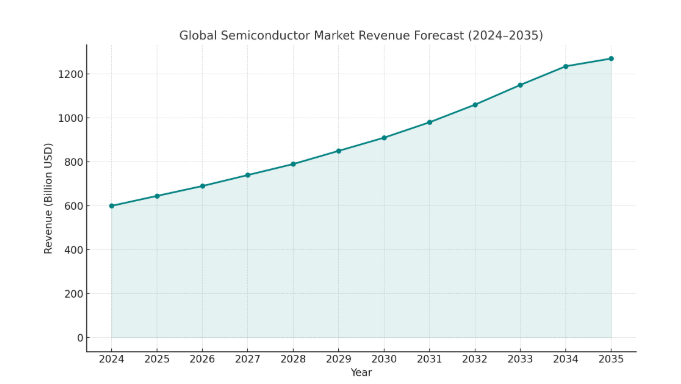
The semiconductor manufacturing trends are on track to surpass the industry at $1.27 trillion by 2035, fueled by surging demand in AI, automotive, edge computing, and quantum applications. As we move deeper into the era of technological supremacy, the fight for dominance has intensified among giants like TSMC, Intel, Samsung, NVIDIA, and AMD.
Market Forecast at a Glance
| Metric | 2024 Estimate | 2035 Projection | CAGR (2024–2035) |
| Global Revenue | $600 Billion | $1.27 Trillion | ~7.2% |
| AI Chip Market Share | 17% | 33% | High-Growth |
| Automotive Semiconductor Share | 9% | 16% | Moderate Growth |
| Foundry Revenue (TSMC-led) | $130 Billion | $290 Billion | ~8.0% |
| Fabless Chip Designers’ Share | 29% | 42% | Increasing |
Projected Market Share by 2035
Semiconductor market share 2035
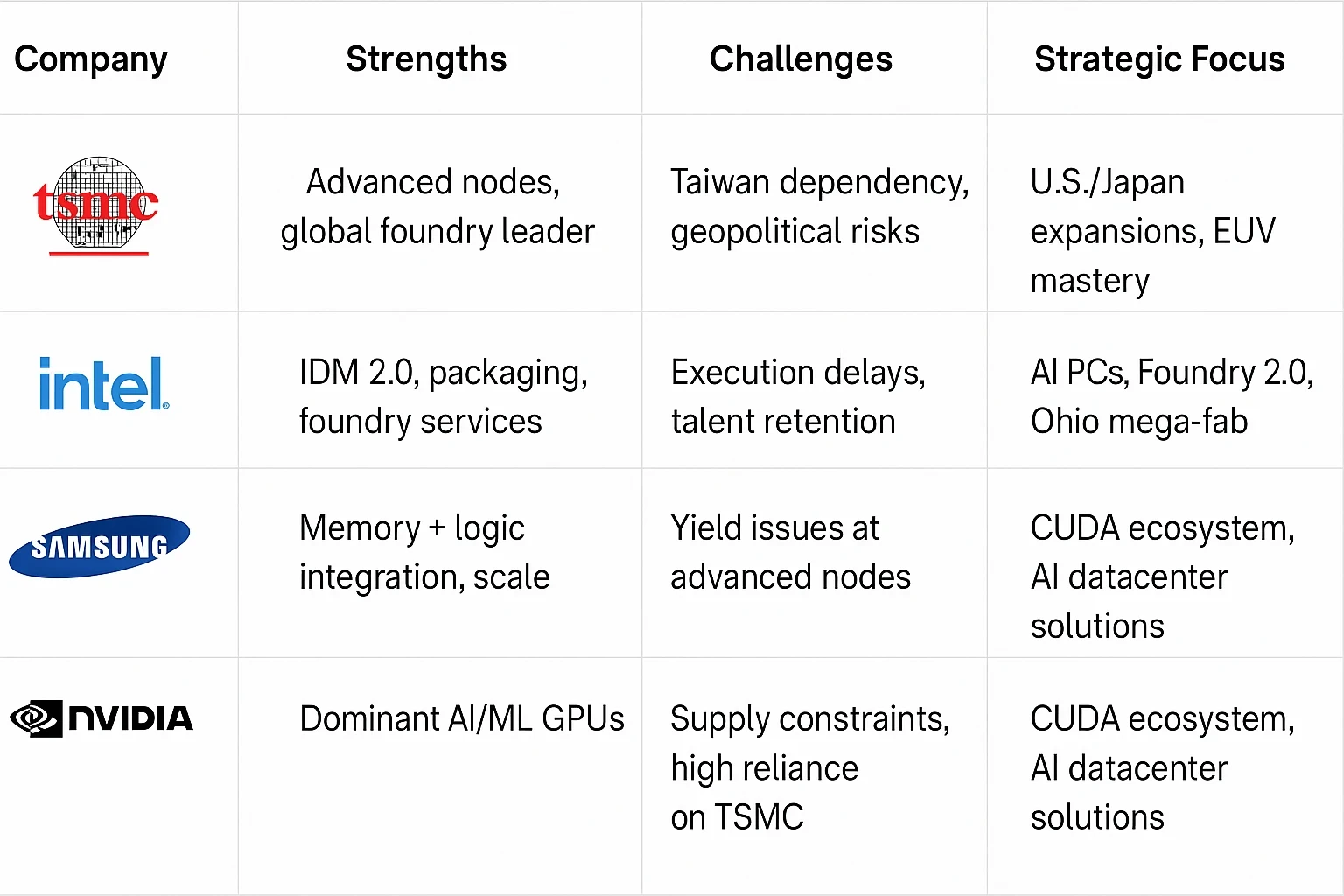
TSMC leads with a projected 23% market share, driven by its dominance in 2nm and sub-2nm foundry processes.
Intel and Samsung are expected to compete fiercely, with major breakthroughs in 3D packaging and integrated photonics.
NVIDIA and AMD are rising stars, fueled by demand in AI/ML and high-performance computing (HPC).

Key Industry Forces
- AI & Edge Computing: Specialized chips like NVIDIA’s Grace Hopper and AMD’s MI300 are rewriting performance benchmarks.
- Geopolitical Tech Wars: US-China tensions and CHIPS Act funding are reshaping global supply chains.
- Vertical Integration: Apple, Google, and Amazon are building in-house chip design teams to reduce dependency.
- R&D Investments: Over $250B is expected to be poured into semiconductor R&D globally between 2025–2035.
Who Will Win the Race?
Final Thoughts
The semiconductor future hinges on fab dominance, AI integration, and geopolitical strategy. While TSMC leads today, the rise of NVIDIA, the comeback of Intel, and the strategy of fabless giants could shift the leaderboard dramatically by 2035.
Want detailed forecasts and investment-grade insights?
🔗 Explore full market intelligence reports at www.oplexa.com